
Remove wisdom teeth to avoid pain
Wisdom teeth (third molars) are the last teeth to grow in — typically between ages 17 and 25, known as the "wisdom age."
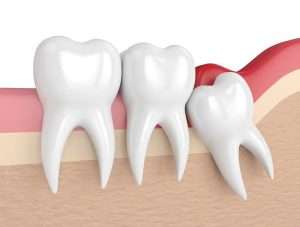
What are impacted wisdom teeth?
When a tooth cannot fully enter the mouth during growth, it's "impacted." Generally, impacted wisdom teeth can't break through the gums because there isn't enough room.
Risks of impacted wisdom teeth
Leaving an impacted wisdom tooth can harm surrounding teeth and become infected. The third-molar area is difficult to clean — an area where bacteria grow and cause gum infections. Oral bacteria can travel from mouth to bloodstream, causing systemic infection or affecting heart, kidneys and other organs. In some cases, a fluid-filled cyst forms around the root — as it grows, it can hollow out the jawbone and injure surrounding nerves, teeth or structures.
Nonsurgical treatment: Laser Operculectomy
The gum tissue on a partially erupted tooth is called operculum. When food or plaque gets trapped inside, it causes pericoronitis — an acute painful wisdom tooth infection requiring emergency care.
Three options:
- Antibiotics — may take a few days to control.
- Wisdom tooth extraction — patient must be able to open wide, with up to 7 days of recovery.
- Laser operculectomy — immediate relief, no recovery time (future extraction may still be needed).
At Centre Dental, we use Solea laser to remove the infected operculum painlessly. Normally no injections. Not much post-operative bleeding. Ideal for patients with limited jaw opening due to infection, pregnant patients, patients with medical conditions that make surgery risky, and patients who can't take days off for surgical recovery (work, school, important events). After operculectomy we usually prescribe antibiotics; the infection resolves. Future wisdom tooth removal may still be required — at a time of adequate planning.
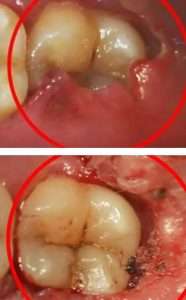
Wisdom tooth treatment process
To prepare for surgical removal, we require CBCT 3D X-ray to make surgery precise, safe and less traumatic. Before surgery, eat well — but avoid coffee if you have high blood pressure. The doctor injects local anesthetics around the tooth. When the surrounding tissue is numb, Dr. Shi uses surgical or non-surgical extraction depending on the tooth's position and structure — prioritizing safety, minimal trauma and quick recovery.
After the procedure, sutures are usually required to help stop bleeding and heal the wound. You go home after biting on folded gauze. You'll receive detailed customized instructions for smooth healing.
Dental Implants
AI-guided precision implants. Same-day options for qualifying patients.
Learn MoreBook Now
Main: (212) 925-7066
Cantonese: (866) 405-9737
Invisalign
Clear aligners that straighten teeth without metal braces.
Learn MoreWhy choose Dr. Shi?
Dr. Shi received professional surgical training at Columbia University, Hackensack Medical Center and New York University.
He has been performing minimally invasive tooth extraction for many years. Many patients are very satisfied and recommend friends and family.
Dr. Shi's method of wisdom tooth extraction is minimally invasive, easy to treat, with small wounds and quick recovery. Dr. Shi is always available to answer any questions you may have — you can reach him even after hours if you need assistance after the procedure.